Featured

How Professional Guidance Manage Payments in 2026
Table of Contents
Financial obligation consolidation is the process of integrating multiple debts into a single loan with one month-to-month payment. If you're handling credit card balances, medical bills, individual loans, or other financial obligations in 2026, debt consolidation can simplify your financial life. The objective is basic: reduce financial tension, possibly save money on interest, and develop a clear path to becoming debt-free.
1 Understand the fundamentals of integrating several financial obligations into a single loan with one month-to-month payment. 2 Discover how financial obligation consolidation can reduce your rate of interest, simplify payments, and possibly improve your credit rating. 3 Learn which financial obligations are great candidates for consolidation and which ones to approach with caution.
Instead of juggling a number of charge card bills, medical payments, and other responsibilities each month, you make a single payment to one loan provider. This approach streamlines your finances and can minimize the overall interest you pay with time. Many Iowa households utilize debt combination to regain control of their financial resources. When you have credit card balances with rates of interest above 20%, consolidating those debts into an individual loan with a lower rate can save hundreds or even thousands of dollars annually.
Managing payment due dates, interest rates, and minimum payments across a number of accounts creates tension and increases the danger of missed out on payments. by providing you one foreseeable monthly payment with a clear payoff date. When you work with a regional loan provider like FSB, you get customized guidance on whether consolidation makes sense for your situation.
Using Loan Calculators for 2026
that covers the overall amount of your existing financial obligations. You then use this loan to pay off your charge card, medical expenses, or other responsibilities. After that, you concentrate on paying back the combination loan through one regular monthly payment. Your new loan generally includes a fixed rates of interest and set repayment term, typically between 2 and 7 years.
You understand exactly when your last payment will be and how much you will pay every month. 1 Add up all balances you wish to combine, including interest rates and month-to-month payments. 2 Your score figures out the interest rate you receive. Higher scores mean much better rates. 3 Submit your application with evidence of earnings and debt info.
5 Concentrate on one foreseeable payment until your debt is entirely paid off. Looking for a debt consolidation loan includes examining your current debts, inspecting your credit score, and figuring out just how much you need to obtain. Lenders evaluate your income, existing financial obligation responsibilities, and credit rating to determine your rates of interest and loan terms.
Before applying, gather your most current statements for all debts you want to consolidate. When authorized, you receive funds to pay off your existing debts.
, you close those accounts or keep them open with zero balances, depending on your credit technique. This consistency can in fact improve your credit score over time, specifically if your previous debt load was causing high credit utilization.
Assessing Debt Management versus Loans in 2026
This distinction can equate to substantial cost savings over the life of your loan. You stop computing whether you can afford minimum payments across numerous accounts.
Financial obligation consolidation creates an easy system you can stick to month after month. Unlike credit cards with variable minimum payments, your combination loan payment remains the exact same throughout the repayment duration.
Improving Personal Literacy Through Effective Debt ManagementCombination can help your credit report in numerous ways. Settling credit cards minimizes your credit utilization ratio, which accounts for 30% of your score. Keeping those cards open after reward maintains your offered credit, more enhancing this ratio. Your payment history enhances when you make constant on-time payments on your consolidation loan.
Payment History (35%) Positive Effect Credit Usage (30%) Positive Impact Credit Report Length (15%) Neutral Impact Charge card without a structured repayment strategy can take years to pay off if you only make minimum payments. You understand that in three years, or 5 years, or whatever term you pick, you will be debt-free if you stay with the payment schedule.
These include credit card balances, medical bills, individual loans, and some kinds of shop funding. The crucial element is that these financial obligations are not connected to collateral like a house or car. Consolidating high-interest charge card debt makes the many sense financially. If you bring balances on multiple cards, specifically those with rates above 15%, debt consolidation can provide instant relief through lower interest charges.
Leveraging Loan Calculators for 2026
Their high rate of interest and revolving nature make them expensive to carry long-term., you transform a revolving balance into a structured repayment strategy with a lower rate. After combination, you can keep your credit cards open for emergency situations or small purchases you settle month-to-month. The key is avoiding adding balances once again after consolidation.
Medical costs often carry no interest initially however can go to collections if unpaid, destructive your credit. Consolidating medical financial obligation into an individual loan safeguards your credit and supplies a workable payment strategy. Some medical providers use payment strategies, however these might still affect your credit utilization if reported to credit bureaus.
If you have existing personal loans or high-interest payday loans, consolidating them can minimize your overall interest problem. Federal trainee loans ought to not be combined through a personal loan.
How to Combine High Interest Debt in 2026
Keep federal trainee loans different from your debt consolidation strategy. Guaranteed financial obligations like home mortgages and car loans generally need to not be combined with unsecured financial obligation, as this can put your security at danger.
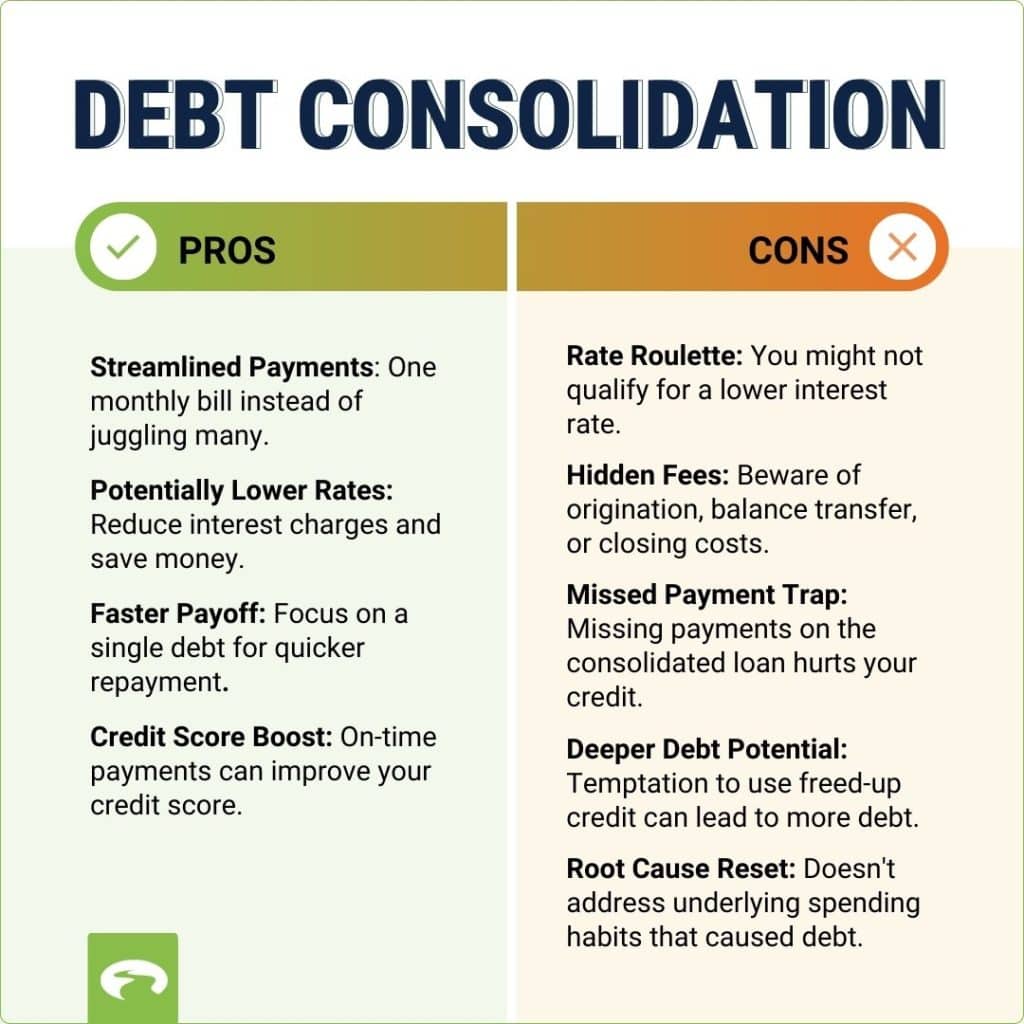
The right technique depends on your credit report, the amount of debt you bring, and whether you own a home. Best for most situations Fixed rates and terms Foreseeable month-to-month payments No collateral required Clear payoff timeline Best for short-term financial obligation 0% intro APR periods Balance transfer fees apply Requires good credit Should settle before promo ends Best for homeowners with equity Lowest rate of interest Home acts as security Tax benefits might apply Threat of foreclosure if unpaid Personal loans from banks or credit unions provide repaired rates and terms, making them predictable and uncomplicated.
This technique works well for those with good to excellent credit who desire a basic option. FSB offers individual loans created for debt consolidation with competitive rates and versatile terms. Dealing with a regional loan provider implies you get customized service and can discuss your specific scenario face-to-face. Some credit cards provide marketing periods with 0% interest on balance transfers.

Latest Posts

How to Combine Credit Card Debt in 2026
Best Strategies to Consolidate Credit Balances
How Professional Guidance Manage Payments in 2026